
skywud r

6 Common Applications of Plywood in Residential Spaces

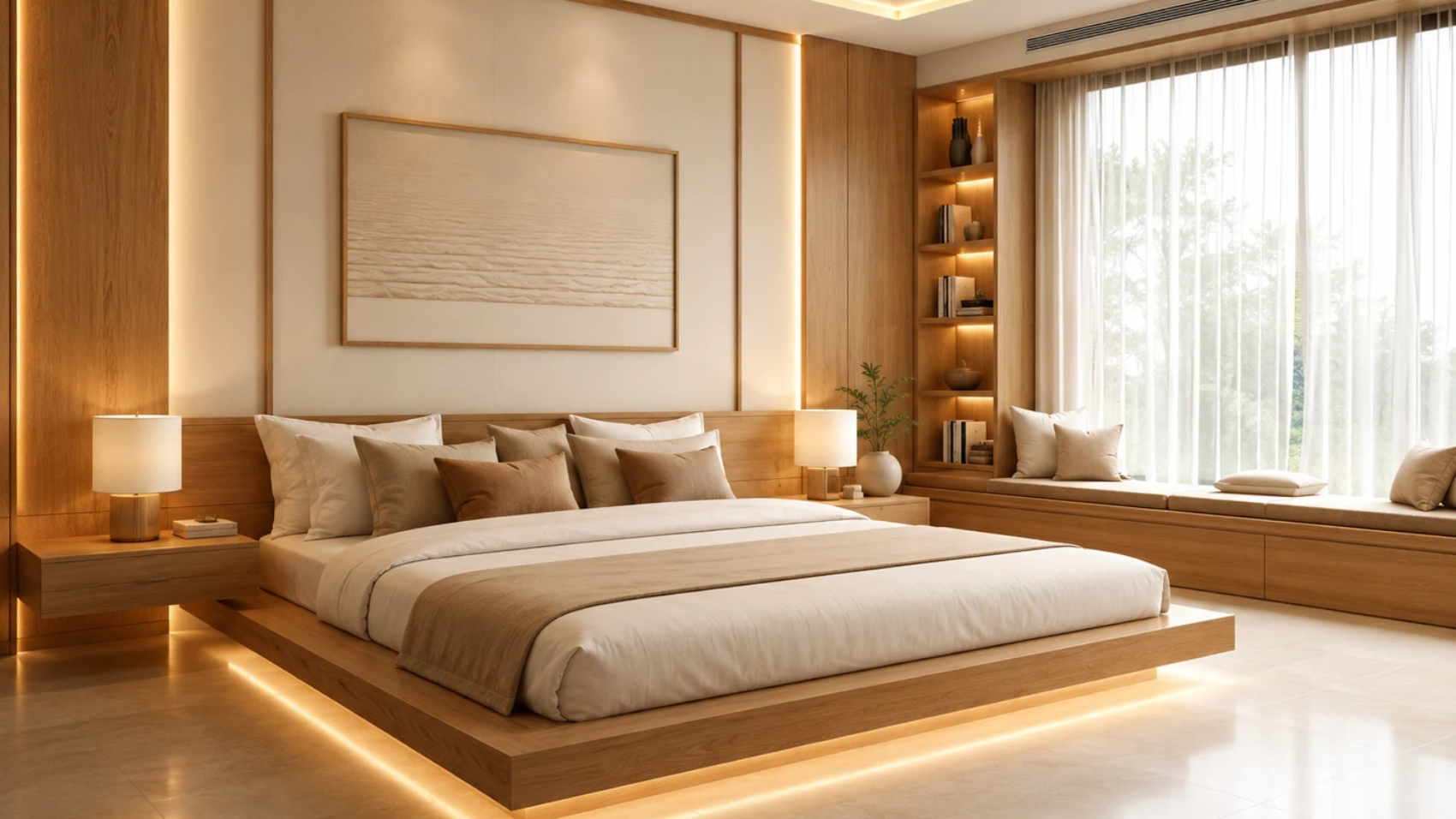
Plywood has quietly become one of the most relied-upon materials in home construction and interior design. It brings together strength, adaptability, and a finished look in a way few other engineered boards manage, which is exactly why it shows up in so many different corners of a house — from the walls that frame a room to the furniture that fills it. At Skywud, we supply plywood built for these everyday residential applications, so whether you’re renovating a single room or fitting out an entire home, there’s a grade suited to the job. Here are six of the most common ways plywood is used in residential spaces

1. Interior Walls

Plywood has quietly become one of the most relied-upon materials in home construction and interior design. It brings together strength, adaptability, and a finished look in a way few other engineered boards manage, which is exactly why it shows up in so many different corners of a house — from the walls that frame a room to the furniture that fills it. At Skywud, we supply plywood built for these everyday residential applications, so whether you’re renovating a single room or fitting out an entire home, there’s a grade suited to the job. Here are six of the most common ways plywood is used in residential spaces

2. Furniture

Plywood’s strength relative to its weight makes it a natural fit for furniture — everything from dining tables and bed frames to chairs and side units. Unlike solid wood, which can be heavy and prone to movement with humidity, plywood offers a more predictable, stable base that holds joints and hardware well over years of use. Furniture-grade plywood in particular is chosen for pieces that need to look refined while standing up to daily handling.

3. Cabinets

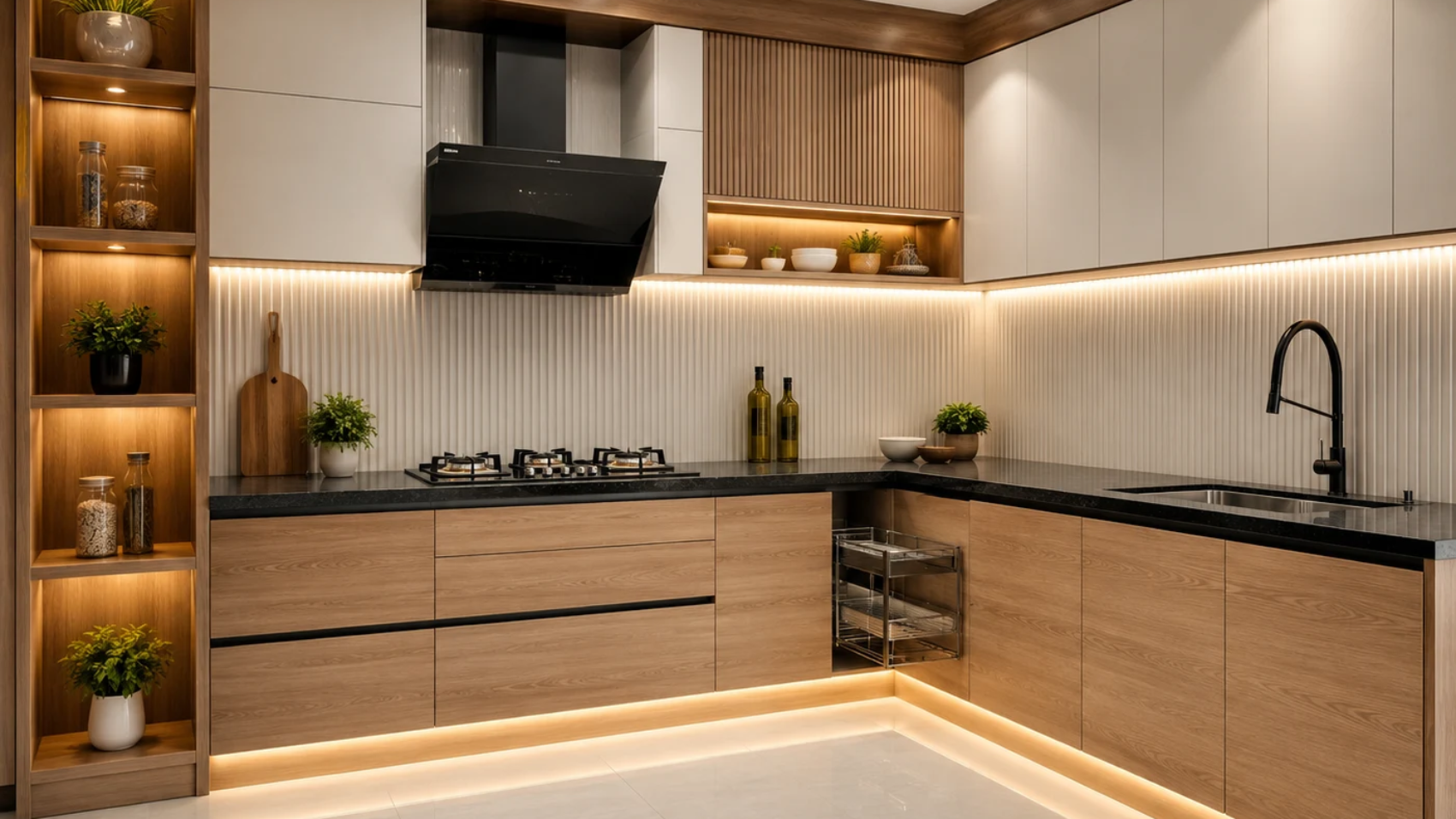
Kitchen and bathroom cabinets are two of the most demanding applications in any home — constant handling, exposure to moisture, and the weight of stored items all add up over time. Plywood, especially in moisture-resistant grades, holds its shape and structural integrity in these conditions far better than boards not built for the job. It’s a big part of why plywood cabinetry has become the standard in modern modular kitchens and bathroom vanities.

4. Kitchen Renovations

Beyond just cabinets, plywood shows up across a kitchen renovation in cabinet carcasses, shelving, countertop backing, and even kitchen islands. A well-chosen plywood grade keeps these components stable despite the steam, spills, and daily wear a kitchen sees, while still supporting the laminate or veneer finish that gives the space its final look. Getting the plywood grade right here often matters more than any other single decision in a kitchen renovation.

5. Flooring Underlayment

Before a finished floor goes down — whether it’s hardwood, laminate, or tile — plywood is frequently used as a subfloor layer to even out the surface and add rigidity. This underlayment role isn’t visible once the project is done, but it has a real effect on how solid and stable the final floor feels underfoot, and how well it resists flexing or unevenness over time.

6. DIY and Custom Projects

Plywood remains a favorite for DIY builders and hobbyists, mostly because it’s easy to cut, shape, and finish without specialized equipment. Bookshelves, workbenches, custom storage units, and countless other small builds rely on plywood’s combination of workability and strength, making it accessible for home projects that don’t need professional installation.

Choosing the Right Plywood for Your Home

Across all of these applications, the common thread is that plywood needs to be matched to the conditions it’ll face — a bookshelf and a kitchen cabinet carcass don’t need the same grade, even though both are technically “furniture.” At Skywud, our plywood range — including Platinum Plus, Platinum, and Legend Premium Plus — is built to cover this spread, from everyday interior furniture to higher-moisture zones like kitchens and bathrooms. Alongside our plywood, we also supply laminates, mica laminate, particle board, HDF, MDF, and door hardware, so a full room — walls, cabinets, and finish — can be sourced consistently from one place.

Get in touch with us to talk through your project and find the right plywood grade for each application in your home.
sky

Key Considerations When Choosing Plywood for Kitchens

Few spaces in a home put materials through as much day-to-day stress as the kitchen. Steam, spills, heat from appliances, constant opening and closing of shutters, and the sheer weight of everyday storage all add up over time. Plywood forms the backbone of most kitchen components — cabinets, shelving, shutters, and built-in units — so its long-term performance matters just as much as how it looks on installation day. Here are seven things worth checking before you settle on a plywood sheet for your kitchen.

1. How It Handles Moisture and Heat

Kitchens are one of the few spaces where moisture and heat show up together, regularly, and often at the same time — from daily cleaning, cooking steam, and appliances tucked inside enclosed units. This combination puts sustained stress on plywood, especially in lower shelves and enclosed cabinets that don’t get much airflow. Judging plywood purely by its thickness or surface finish won’t tell you how it’ll actually hold up under this kind of repeated exposure.

It also helps to be clear on what “waterproof” plywood really means in practice — it refers to boards manufactured with moisture-resistant bonding that reduces the risk of the layers separating in damp conditions. It doesn’t mean the board can handle direct, prolonged water contact without any consequence.

Different kitchen zones call for different resistance levels — interior cabinetry that only sees ambient humidity doesn’t need the same grade as areas closer to the sink or hob that deal with regular splashing. Before buying, it’s worth confirming the sheet is actually rated for kitchen conditions, what level of resistance the specific area needs, and how it’s expected to perform months and years down the line, not just on day one.

2. Internal Construction and Bonding Quality

Surface finish is what catches your eye first, but it tells you almost nothing about how a plywood sheet is built underneath. What actually determines long-term reliability — for cabinets, internal shelving, partitions, and other built-in kitchen elements — is the quality of the internal layering and the bonding holding those layers together.

Internal construction comes down to a few things: how many layers the board has and how uniform they are, whether the core has gaps or voids, and whether that consistency holds across the whole sheet rather than just in a few spots. A board with even, well-bonded layers behaves predictably; one with hidden inconsistencies can develop weak points that aren’t visible until much later.

Bonding quality matters just as much — it’s what keeps the layers acting as one solid panel instead of gradually pulling apart. Poor bonding is often invisible at the time of installation and only becomes obvious as a problem years later, once the layers start to separate.

When evaluating a sheet, it helps to ask directly about the internal construction rather than judging by how smooth the face looks, check any exposed edges or cut sample pieces for gaps or irregular layering, and get clarity on the bonding process used. A good-looking surface doesn’t tell you anything about what’s happening inside the board — that’s a separate check entirely.

3. Dimensional Stability Over Time

Dimensional stability is about whether a plywood sheet holds its original shape as time goes on, not just how straight it looks on installation day. A shutter or panel that’s perfectly aligned when fitted can still warp, sag, or shift months later if the board isn’t dimensionally stable.

Signs of instability tend to show up gradually — shutters or vertical panels that start to warp, shelves that begin to sag under sustained weight, or tall units that slowly lose their alignment. None of this is obvious at first, which is exactly why it needs to be checked upfront rather than assumed.

Because kitchen components are used daily, this kind of stability is especially important for cabinets, shelving, partitions, and other fitted elements that depend on staying properly aligned. Before buying, it’s worth confirming whether a plywood sheet is actually recommended for applications that need long-term shape retention — shutters, shelves, tall units — and whether there’s any real guidance on how it performs beyond the first few months of use.

4. Load-Bearing Capacity and Daily Wear

Kitchen plywood deals with constant functional stress — the ongoing weight of stored utensils, appliances, and pantry items, plus the repeated motion of shutters and drawers opening and closing. Over time, both factors affect how well components stay aligned and how smoothly they continue to operate.

Thickness is usually the first thing people look at, but it only means something in relation to how the board will actually be used — it’s not a number to pick in isolation. Different kitchen components carry different loads, so thickness should be matched to function rather than treated as a one-size-fits-all decision.

As a general guide, sheets around 19mm tend to be used for cabinet construction, since they offer more rigidity for regular storage weight and frequent handling. Thinner options like 12mm or 16mm are typically considered for lighter-load or supporting components. A knowledgeable supplier can help confirm whether a specific thickness actually suits the application you have in mind, rather than just going by a standard recommendation.

5. Edge Integrity and Surface Compatibility

Edges are one of the most overlooked details when choosing kitchen plywood, but they matter more than most people realize. A surface finish can look perfectly uniform while the edges — which are far more exposed, especially near sinks and high-cleaning areas — are where problems actually start.

Moisture from spills, cleaning, and general humidity is far more likely to work its way in through a poorly finished or exposed edge than through the flat surface of the board. Rough or uneven edges can also compromise how well laminate adheres, even if the face of the panel looks fine. Left unchecked, this can eventually lead to swelling, peeling laminate, or visible surface deterioration.

Since a kitchen typically uses multiple plywood sheets across different components, consistent edge quality across all of them helps keep the overall finish stable and even. Before buying, check exposed sections or sample cut-offs for clean, uniform edges, look for chipping, gaps, or irregular layering along those edges, and ask how the edges are meant to be finished or sealed once installed.

6. Consistency Across Multiple Sheets

Because a kitchen almost always uses several plywood sheets across cabinets, shutters, and internal fittings, consistency between those sheets matters just as much as the quality of any single board. Even small variations in thickness or flatness can throw off alignment during installation — and in a modular kitchen, where units sit right next to each other, those inconsistencies become very noticeable very fast.

A simple way to check this before committing to a batch is to stack or align a few sheets side by side and look for any noticeable differences in thickness, flatness, or surface level. Sheets that are genuinely consistent reduce the amount of on-site adjustment needed during installation and help the finished kitchen look and function the way it was designed to.

7. Formaldehyde Emissions and Indoor Safety

In an enclosed space like a kitchen, where materials surround you daily across multiple surfaces, indoor air quality is as much a part of “performance” as strength or moisture resistance. This is where formaldehyde emission levels come in — a factor that’s easy to overlook next to more visible specs like thickness or finish.

Emission norms essentially indicate how much formaldehyde a plywood product might release into indoor air over time. Lower emission levels mean less long-term exposure, without any real trade-off in strength or durability. When evaluating options, look for plywood explicitly suited to interior use with documented low emissions, clear information on emission-related specifications rather than vague claims, and reference to recognized testing standards behind those numbers. A kitchen that’s durable but not accounted for on air quality is only half the job done.

Making the Right Choice with Skywud

At Skywud, our plywood range is built around exactly these day-to-day kitchen realities — moisture exposure, daily handling, dimensional stability, edge quality, and indoor air safety — rather than just how a sheet looks fresh out of the stack. Our Legend Premium Plus range is well suited to interior kitchen joinery where controlled, everyday moisture resistance is enough, while our Platinum and Platinum Plus ranges are built for zones that see heavier moisture stress or more demanding daily use, such as areas closer to the sink or high-traffic storage units.

We’re happy to share technical data sheets and sealed sample off-cuts so you can check internal construction, bonding, and edge quality for yourself before committing to a full order. Along with our plywood, our laminates, mica laminate, particle board, HDF, MDF, and door hardware are available to help you finish the kitchen from a single, consistent source. Reach out to us for samples, technical guidance, or help matching the right grade to your kitchen’s specific demands.

blog 1

Plywood Sheets: A Practical Buying Guide for Homes and Furniture

When you’re building a new home or getting custom furniture made, one decision quietly shapes how everything holds up years down the line: the material behind the finish. That’s where plywood sheets come in. Valued for their strength, dimensional stability, and versatility, plywood sheets show up everywhere — from kitchen shutters to wardrobe carcasses to structural backing panels. Whether you’re redoing your modular kitchen, getting a new TV unit built, or laying a sublayer under your flooring, the plywood you pick has a real effect on how the finished piece survives daily wear, moisture, and time.

At Skywud, plywood is just one part of what we supply — alongside laminates, mica laminate, particle board, HDF, MDF, and door hardware like hinges, locks, handles, and screws — but it’s usually the first and most important decision in any interior or furniture project. This guide breaks down what plywood sheets actually are, how they differ from other board materials, the Skywud plywood range, and how to choose the right one for your project.

What Exactly Is Plywood?

Plywood is a manufactured wood panel made by gluing together several thin sheets of wood veneer, with each layer rotated 90 degrees relative to the one below it. This cross-laminated pattern is the whole trick: it spreads stress along both directions of the grain instead of just one, which is why plywood resists warping, splitting, and twisting far better than a plank of solid timber. The veneers are pressed together under heat and controlled pressure using adhesive resins, and the result is a panel that behaves predictably — sheet after sheet, batch after batch — which matters a lot when you’re relying on it for cabinetry, flooring bases, or anything meant to last.

Where Plywood Shows Up Around the House

Plywood sheets aren’t limited to one corner of a home — they’re used wherever a panel needs to hold shape and carry load over the long haul.

  • Cabinetry and storage: Wardrobes, kitchen cabinets, bookshelves, bed frames, and loft units all commonly use plywood as their core structure.
  • Kitchens and wet areas: Base units and shelving in kitchens and utility rooms see frequent handling and occasional moisture, so plywood is a go-to there.
  • Wall cladding and panelling: Plywood often sits behind decorative wall finishes as a stable, screw-friendly backing.
  • Underlayment for flooring: A plywood sublayer helps even out a subfloor before the final flooring goes down.
  • Doors and partitions: Flush doors, sliding panels, and interior partitions are frequently built around a plywood core.
  • Staircases: Risers, treads, and side panelling in staircases benefit from plywood’s load-bearing consistency.
  • Balconies and semi-outdoor nooks: Enclosed balcony storage and furniture that sees indirect weather exposure often calls for a moisture-resistant plywood.

Plywood Versus the Other Board Options

It’s easy to get stuck comparing plywood, MDF, particle board, and OSB without a clear sense of what actually separates them. Here’s the short version:

  • Plywood vs. MDF: MDF is made from compressed wood fibres, which gives it a smooth, paint-ready surface — but it doesn’t have plywood’s cross-grain strength. For anything structural, like cabinet frames, plywood generally holds up better.
  • Plywood vs. particle board: Particle board is formed from wood chips bonded with resin, and it works fine for light-duty, dry-condition use. Plywood, thanks to its layered build, generally offers steadier strength and better grip for screws over time.
  • Plywood vs. OSB: OSB (oriented strand board) is built mainly for construction use where looks don’t matter much. Plywood tends to have a smoother, more even surface, making it the better pick for furniture and any visible interior application.
  • Plywood vs. solid wood: Solid wood looks beautiful but moves with humidity — expanding, contracting, sometimes cracking. Plywood is engineered specifically to minimize that movement, so it behaves more predictably indoors.

The Skywud Plywood Range

Rather than picking from vague generic labels, Skywud offers a focused plywood range built around real performance tiers, so you can match the sheet to the job instead of guessing:

  • Platinum Plus: Our top-tier plywood, built for applications where strength, durability, and moisture resistance all matter at once — ideal for kitchen cabinetry, wardrobes, and furniture that needs to perform reliably for years without compromise.
  • Platinum: A dependable mid-to-premium option suited to everyday furniture and interior applications — cabinets, shelving, and built-in units — where solid strength and finish quality are needed without the extra specification of Platinum Plus.
  • Legend Premium Plus: Positioned for general interior furniture and fixed elements, Legend Premium Plus is a reliable choice for dry, everyday-use spaces such as wardrobes, storage units, and non-wet-area furniture.

Alongside plywood, Skywud also supplies particle board, HDF, and MDF as alternative board options for projects with different load, finish, or budget requirements — so if plywood isn’t the right fit for a particular application, there’s usually a suitable alternative in the same range.

How to Pick the Right Plywood for Your Project

Getting the Thickness Right

Thickness isn’t about picking the biggest number — it’s about matching the panel to the job.

  • Think about the span the plywood has to cover and the weight it’ll carry; wider, heavier applications need thicker stock.
  • For everyday furniture like cabinets and wardrobes, a mid-range thickness usually balances strength and weight well.
  • Flooring underlays and structural panels typically call for thicker sheets to minimize flex.
  • Decorative panelling and cladding can often get away with thinner plywood, especially when it’s backed by a solid frame.
Judging Quality Beyond the Surface

A plywood sheet that looks fine on the outside can still be inconsistent inside. Worth checking:

  • Certifications: Look for recognized quality marks (like ISI certification) that confirm the plywood meets baseline safety and performance standards.
  • Core consistency: A well-built, uniform core means the panel behaves the same way across its entire surface — no weak spots.
  • Bonding quality: Strong veneer-to-veneer bonding prevents delamination and layer separation down the line.
  • Emission levels: For indoor use, check for low-emission standards (E0/E1) to keep formaldehyde exposure in check.
  • Surface finish: A clean, even surface makes a real difference in how well paint, laminate, or veneer finishes take — and how long they last.

What Drives Plywood Pricing

Plywood prices vary more than people expect, and it’s rarely just about brand name. The real drivers are:

  • Thickness: More material and more processing naturally push the price up.
  • Grade and intended use: Plywood built for demanding or wet environments goes through tighter manufacturing controls, which shows up in the price.
  • Moisture resistance: Waterproof-grade boards require extra treatment and testing.
  • Manufacturing consistency: Reliable core construction and bonding add real value, even if it’s not visible at first glance.
  • Certifications: Compliance with recognized quality and emission benchmarks is a sign of tested, verified performance.
  • Warranty terms: A longer warranty is usually a signal that the manufacturer trusts their own product.

Beyond the Core: Finish and Hardware Matter Too

A great plywood core is only half the job — how it’s finished and fitted is what the end user actually sees and touches every day.

  • Laminates and mica laminate: Once your plywood carcass is built, laminates and mica finishes are what give cabinets, wardrobes, and shutters their final look — from matte and glossy solids to wood-textured finishes. Choosing a laminate that suits the room’s use (high-touch kitchen shutters vs. low-touch wardrobe interiors) matters as much as the board underneath.
  • Door hardware: Hinges, locks, handles, and screws are small components with an outsized effect on how furniture feels day to day. Soft-close hinges, corrosion-resistant fittings in kitchens, and properly rated locks all extend the working life of a cabinet or door well beyond what the board material alone can guarantee.

Sourcing plywood, laminates, and hardware from one place makes it easier to match finishes and grades consistently across a project — which is where Skywud’s full catalog comes in.

Conclusion

Choosing plywood isn’t just a checkbox in a renovation or furniture order — it’s one of the decisions that quietly determines how well your space performs five, ten, or twenty years from now. Matching the grade to the environment (dry versus humid), getting the thickness right for the load, and checking for real certification rather than just a smooth finish will save you from expensive rework later.

At Skywud, our Platinum Plus, Platinum, and Legend Premium Plus plywood ranges — along with our laminates, mica laminate, particle board, HDF, MDF, and door hardware — are built to work together, so you’re not left mixing and matching mismatched materials across a single project. Reach out to us to find the right combination for your specific space.