
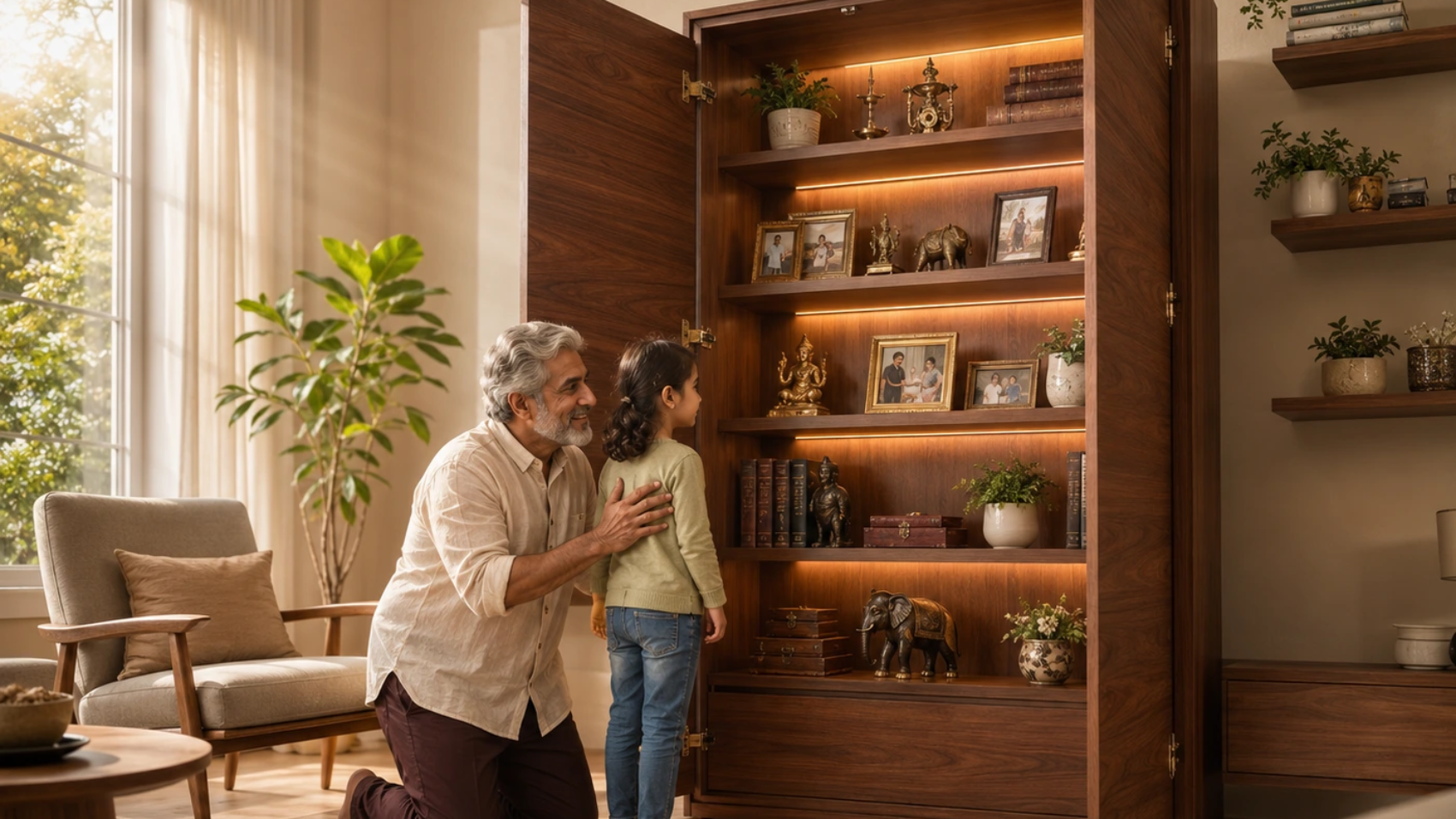
When you’re building a new home or getting custom furniture made, one decision quietly shapes how everything holds up years down the line: the material behind the finish. That’s where plywood sheets come in. Valued for their strength, dimensional stability, and versatility, plywood sheets show up everywhere — from kitchen shutters to wardrobe carcasses to structural backing panels. Whether you’re redoing your modular kitchen, getting a new TV unit built, or laying a sublayer under your flooring, the plywood you pick has a real effect on how the finished piece survives daily wear, moisture, and time.
At Skywud, plywood is just one part of what we supply — alongside laminates, mica laminate, particle board, HDF, MDF, and door hardware like hinges, locks, handles, and screws — but it’s usually the first and most important decision in any interior or furniture project. This guide breaks down what plywood sheets actually are, how they differ from other board materials, the Skywud plywood range, and how to choose the right one for your project.
What Exactly Is Plywood?
Plywood is a manufactured wood panel made by gluing together several thin sheets of wood veneer, with each layer rotated 90 degrees relative to the one below it. This cross-laminated pattern is the whole trick: it spreads stress along both directions of the grain instead of just one, which is why plywood resists warping, splitting, and twisting far better than a plank of solid timber. The veneers are pressed together under heat and controlled pressure using adhesive resins, and the result is a panel that behaves predictably — sheet after sheet, batch after batch — which matters a lot when you’re relying on it for cabinetry, flooring bases, or anything meant to last.
Where Plywood Shows Up Around the House
Plywood sheets aren’t limited to one corner of a home — they’re used wherever a panel needs to hold shape and carry load over the long haul.
- Cabinetry and storage: Wardrobes, kitchen cabinets, bookshelves, bed frames, and loft units all commonly use plywood as their core structure.
- Kitchens and wet areas: Base units and shelving in kitchens and utility rooms see frequent handling and occasional moisture, so plywood is a go-to there.
- Wall cladding and panelling: Plywood often sits behind decorative wall finishes as a stable, screw-friendly backing.
- Underlayment for flooring: A plywood sublayer helps even out a subfloor before the final flooring goes down.
- Doors and partitions: Flush doors, sliding panels, and interior partitions are frequently built around a plywood core.
- Staircases: Risers, treads, and side panelling in staircases benefit from plywood’s load-bearing consistency.
- Balconies and semi-outdoor nooks: Enclosed balcony storage and furniture that sees indirect weather exposure often calls for a moisture-resistant plywood.
Plywood Versus the Other Board Options
It’s easy to get stuck comparing plywood, MDF, particle board, and OSB without a clear sense of what actually separates them. Here’s the short version:
- Plywood vs. MDF: MDF is made from compressed wood fibres, which gives it a smooth, paint-ready surface — but it doesn’t have plywood’s cross-grain strength. For anything structural, like cabinet frames, plywood generally holds up better.
- Plywood vs. particle board: Particle board is formed from wood chips bonded with resin, and it works fine for light-duty, dry-condition use. Plywood, thanks to its layered build, generally offers steadier strength and better grip for screws over time.
- Plywood vs. OSB: OSB (oriented strand board) is built mainly for construction use where looks don’t matter much. Plywood tends to have a smoother, more even surface, making it the better pick for furniture and any visible interior application.
- Plywood vs. solid wood: Solid wood looks beautiful but moves with humidity — expanding, contracting, sometimes cracking. Plywood is engineered specifically to minimize that movement, so it behaves more predictably indoors.
The Skywud Plywood Range
Rather than picking from vague generic labels, Skywud offers a focused plywood range built around real performance tiers, so you can match the sheet to the job instead of guessing:
- Platinum Plus: Our top-tier plywood, built for applications where strength, durability, and moisture resistance all matter at once — ideal for kitchen cabinetry, wardrobes, and furniture that needs to perform reliably for years without compromise.
- Platinum: A dependable mid-to-premium option suited to everyday furniture and interior applications — cabinets, shelving, and built-in units — where solid strength and finish quality are needed without the extra specification of Platinum Plus.
- Legend Premium Plus: Positioned for general interior furniture and fixed elements, Legend Premium Plus is a reliable choice for dry, everyday-use spaces such as wardrobes, storage units, and non-wet-area furniture.
Alongside plywood, Skywud also supplies particle board, HDF, and MDF as alternative board options for projects with different load, finish, or budget requirements — so if plywood isn’t the right fit for a particular application, there’s usually a suitable alternative in the same range.
How to Pick the Right Plywood for Your Project
Getting the Thickness Right
Thickness isn’t about picking the biggest number — it’s about matching the panel to the job.
- Think about the span the plywood has to cover and the weight it’ll carry; wider, heavier applications need thicker stock.
- For everyday furniture like cabinets and wardrobes, a mid-range thickness usually balances strength and weight well.
- Flooring underlays and structural panels typically call for thicker sheets to minimize flex.
- Decorative panelling and cladding can often get away with thinner plywood, especially when it’s backed by a solid frame.
Judging Quality Beyond the Surface
A plywood sheet that looks fine on the outside can still be inconsistent inside. Worth checking:
- Certifications: Look for recognized quality marks (like ISI certification) that confirm the plywood meets baseline safety and performance standards.
- Core consistency: A well-built, uniform core means the panel behaves the same way across its entire surface — no weak spots.
- Bonding quality: Strong veneer-to-veneer bonding prevents delamination and layer separation down the line.
- Emission levels: For indoor use, check for low-emission standards (E0/E1) to keep formaldehyde exposure in check.
- Surface finish: A clean, even surface makes a real difference in how well paint, laminate, or veneer finishes take — and how long they last.
What Drives Plywood Pricing
Plywood prices vary more than people expect, and it’s rarely just about brand name. The real drivers are:
- Thickness: More material and more processing naturally push the price up.
- Grade and intended use: Plywood built for demanding or wet environments goes through tighter manufacturing controls, which shows up in the price.
- Moisture resistance: Waterproof-grade boards require extra treatment and testing.
- Manufacturing consistency: Reliable core construction and bonding add real value, even if it’s not visible at first glance.
- Certifications: Compliance with recognized quality and emission benchmarks is a sign of tested, verified performance.
- Warranty terms: A longer warranty is usually a signal that the manufacturer trusts their own product.
Beyond the Core: Finish and Hardware Matter Too
A great plywood core is only half the job — how it’s finished and fitted is what the end user actually sees and touches every day.
- Laminates and mica laminate: Once your plywood carcass is built, laminates and mica finishes are what give cabinets, wardrobes, and shutters their final look — from matte and glossy solids to wood-textured finishes. Choosing a laminate that suits the room’s use (high-touch kitchen shutters vs. low-touch wardrobe interiors) matters as much as the board underneath.
- Door hardware: Hinges, locks, handles, and screws are small components with an outsized effect on how furniture feels day to day. Soft-close hinges, corrosion-resistant fittings in kitchens, and properly rated locks all extend the working life of a cabinet or door well beyond what the board material alone can guarantee.
Sourcing plywood, laminates, and hardware from one place makes it easier to match finishes and grades consistently across a project — which is where Skywud’s full catalog comes in.
Conclusion
Choosing plywood isn’t just a checkbox in a renovation or furniture order — it’s one of the decisions that quietly determines how well your space performs five, ten, or twenty years from now. Matching the grade to the environment (dry versus humid), getting the thickness right for the load, and checking for real certification rather than just a smooth finish will save you from expensive rework later.
At Skywud, our Platinum Plus, Platinum, and Legend Premium Plus plywood ranges — along with our laminates, mica laminate, particle board, HDF, MDF, and door hardware — are built to work together, so you’re not left mixing and matching mismatched materials across a single project. Reach out to us to find the right combination for your specific space.